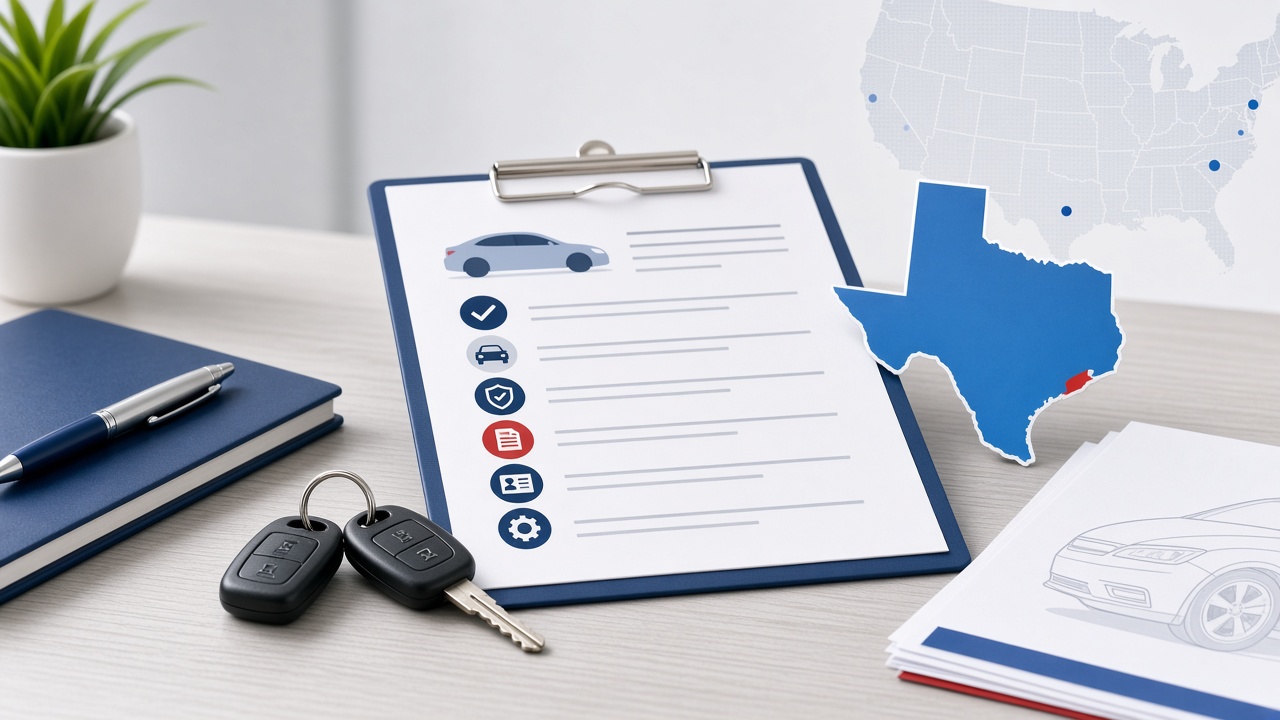
Whether you just bought a car, moved to the Lone Star State, or need to renew plates, understanding Texas vehicle registration helps you stay legal and avoid late fees. Registration links your vehicle to you for highway use, and most paperwork runs through your county tax assessor-collector office under rules set by the Texas Department of Motor Vehicles (TxDMV).
This guide covers what registration is, who must register, documents you typically need, how title and registration differ, and what to expect for new, used, and out-of-state vehicles. Always confirm current fees, forms, and county procedures on TxDMV.gov or with your local county tax office.
What Texas Vehicle Registration Means
Texas vehicle registration authorizes a motor vehicle to operate on public roads in Texas. When it is complete, you generally receive (or keep) license plates and a registration sticker showing the expiration month and year. Registration does not prove ownership by itself—that is the role of the certificate of title.
TxDMV sets statewide requirements, while county tax offices handle first-time registration, renewals, title applications, and many specialty plate requests. Fees can vary by vehicle weight, type, and county, so use the amount on your renewal notice or quoted at the counter.
Who Must Register a Vehicle in Texas
If you operate a vehicle on Texas public roads, it generally must be registered in Texas (with limited exceptions). Common cases include:
- Texas residents who own and drive a car, truck, motorcycle, or other registrable vehicle
- New residents bringing a vehicle from another state (typically within 30 days of establishing residency)
- Buyers of new or used vehicles who need plates and a current sticker
- Out-of-state purchasers who bring a vehicle into Texas and plan to keep it here
New Texans should also plan for a Texas driver license through the Department of Public Safety (DPS), often within 90 days. Registration and licensing are related but handled by different agencies.
Title vs. Registration: Why Both Matter
- Title documents legal ownership (and any liens). A clean paper trail—manufacturer’s certificate of origin for a new car, or a properly assigned title for a used one—matters when ownership changes.
- Registration authorizes road use and is tied to plates and the sticker. You renew registration periodically; titles usually change only when ownership or certain status changes occur.
When you register a car in Texas for the first time, you will often complete the Application for Texas Title and/or Registration (Form 130-U). New residents sometimes choose “Registration Purposes Only” if they are not surrendering an out-of-state title; others apply for a Texas title. Your county tax office can explain which path fits your paperwork.
Documents Typically Needed
Exact checklists vary by county and by whether the vehicle is new, used, or from out of state. Gather these early:
- Completed Form 130-U (for title and/or first-time registration)
- Evidence of ownership (Texas title, out-of-state title, MCO for new vehicles, or other acceptable proof)
- Proof of liability insurance that meets Texas minimums
- Photo ID and proof of Texas residency when requested
- Odometer disclosure when required
- Proof of sales tax payment or tax documentation when applicable
- Any applicable inspection or emissions paperwork
- Payment for registration, title, and related fees
Dealerships often submit title and registration paperwork for you. Private-party purchases put more of the burden on the buyer and seller.
Insurance basics
Texas requires proof of financial responsibility. Minimum liability limits commonly cited for private passenger vehicles are $30,000 per injured person, $60,000 per accident for bodily injury, and $25,000 for property damage. Confirm with your insurer that your policy meets Texas standards—especially if you recently moved.
Inspection and emissions (high level)
Effective January 1, 2025, Texas eliminated the statewide safety inspection for most non-commercial vehicles. Commercial vehicles still need safety inspections. In 17 emissions counties (including Harris, Dallas, Tarrant, Travis, El Paso, and others listed by TxDMV/DPS), many gas-powered vehicles still need a passing emissions inspection before registration or renewal.
Outside those counties, VIN verification for out-of-state vehicles may be handled through self-certification on Form 130-U. Verify the current emissions-county list and any inspection replacement fees on official TxDMV or DPS resources.
New, Used, and Out-of-State Vehicles
New vehicles purchased in Texas
Licensed dealers typically handle title application and initial registration. You still need insurance in place. Newer vehicles may follow different inspection and fee patterns than older ones. Ask the dealer what will appear on your registration receipt and when plates or stickers will arrive.
Used vehicles bought from a dealer or private party
The assigned title, Form 130-U when required, insurance, and applicable taxes and fees are the core of the transfer. Apply for title promptly—Texas can assess delinquent transfer penalties when applications are late (commonly within 30 days of sale). Keep registration current so you can legally drive.
Out-of-state and new residents
To register a car in Texas after a move or out-of-state purchase, plan on:
- Confirming Texas-compliant liability insurance
- Completing any required emissions inspection if you live in an emissions county
- Visiting your county tax office with ownership proof, Form 130-U, insurance, and fees
- Receiving Texas plates and a registration sticker (or temporary credentials if issued)
TxDMV’s “New to Texas” and out-of-state pages are the best official checklists. Bring originals when possible.
How to Register: Step-by-Step Overview
- Confirm ownership documents are complete and correctly assigned.
- Get Texas liability insurance and keep proof handy.
- Handle inspection or emissions only if required for your vehicle and county.
- Complete Form 130-U for title and/or first-time registration when applicable.
- Visit your county tax assessor-collector office (or use dealer processing). Some counties require appointments.
- Pay fees, receive plates/sticker or confirmation, and keep your receipt.
- Renew on time as shown on your sticker, often online when eligible.
For renewals, TxDMV generally allows online renewal up to 90 days before expiration for eligible vehicles, if insurance (and emissions, if required) can be verified. You can also renew in person at the county tax office or an approved substation.
Common Mistakes to Avoid
- Waiting past the 30-day window after moving to Texas or after a purchase
- Confusing title with registration and leaving ownership paperwork incomplete
- Arriving without insurance proof that meets Texas minimums
- Skipping emissions testing when you live in a required county
- Using an outdated address after establishing Texas residency
- Relying on unofficial fee quotes instead of TxDMV or your county tax office
- Driving on expired registration—citations and late fees add up quickly
Renewals and Staying Current
Most passenger vehicles renew annually. Options typically include online renewal through the official TxDMV system (when eligible), in-person renewal at your county tax office, or mail renewal where allowed. Have your renewal notice, insurance, and any required Vehicle Inspection Report (VIR) for emissions counties ready. Ask about TxDMV eReminder when you visit the county office.
Frequently Asked Questions
How long do new residents have to complete Texas vehicle registration?
TxDMV guidance is to register within 30 days of establishing residency. Waiting longer can mean penalty fees.
Do I need a Texas title to register?
Not always. First-time registrants usually file Form 130-U. New residents may register without surrendering an out-of-state title by selecting registration purposes only, or they may apply for a Texas title. Ownership proof is still required either way.
Where do I go for TxDMV registration services?
Most transactions are completed at your county tax assessor-collector office. Find yours on TxDMV.gov. Some counties require appointments.
Can I renew registration online?
Often yes, if your vehicle is eligible, insurance verifies electronically, and any required emissions inspection is on file. Renewals may start about 90 days before expiration. If verification fails, an in-person visit with paper proof usually resolves it.
What if paperwork is messy after a private sale or out-of-state move?
Incomplete titles, missing assignments, lien-release issues, or mismatched VINs are common rejection reasons. Getting documents reviewed before you stand in line saves return trips.
Get Help With Title and Registration Paperwork
When the ownership trail is clear, Texas vehicle registration is straightforward. When you face an out-of-state title, a private-party purchase, a name change, or missing paperwork, preparation goes a long way.
MR TITLES helps drivers with
Texas Vehicle Registration Resources
Use this Texas vehicle registration checklist before you visit the county office. The official Texas vehicle registration requirements at TxDMV page is the best place to confirm current forms, fees, and deadlines.
For a first application, review your Texas vehicle registration documents and make sure the VIN, insurance, ownership proof, and address all match.
When moving from another state, your Texas vehicle registration plan should include the county tax assessor-collector, any required emissions test, and a completed Form 130-U.
For renewals, check your notice early so your Texas vehicle registration does not lapse. Eligible drivers can often renew online after insurance and emissions information are verified.
A dealer or private seller may explain the process, but you remain responsible for confirming your Texas vehicle registration status and keeping the receipt.
- Keep your Texas vehicle registration receipt with your vehicle records.
- Save the renewal date for your next Texas vehicle registration reminder.
If a title issue affects your application, read our Texas title check history guide before submitting paperwork. Clear ownership records make Texas vehicle registration easier to complete.
These steps make Texas vehicle registration more predictable, but county procedures can differ. Confirm the latest instructions directly with TxDMV and your local office.
vehicle title and registration-related paperwork so you can walk into the county office more prepared. Visit mr-titles.com to learn how we support Texas title and registration needs—then confirm final fees and rules with TxDMV and your county tax office.This article is for general informational purposes only and is not legal advice. Requirements change. Always verify current rules, forms, and fees with the Texas Department of Motor Vehicles (TxDMV), the Texas Department of Public Safety, the Texas Department of Insurance, and your local county tax assessor-collector before taking action.